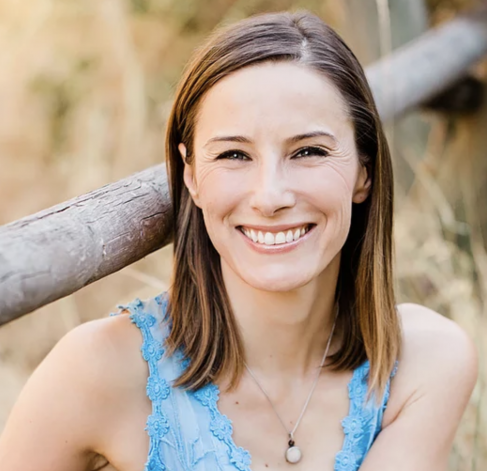
Today Sarah Loebman joins us as a NASA Hubble Fellow and Chancellor’s Postdoctoral Fellow. Previously, Sarah was a postdoc in the Michigan Society of Fellows at the University of Michigan. I am excited that Sarah joins us, forming a real ‘group‘!

Today Sarah Loebman joins us as a NASA Hubble Fellow and Chancellor’s Postdoctoral Fellow. Previously, Sarah was a postdoc in the Michigan Society of Fellows at the University of Michigan. I am excited that Sarah joins us, forming a real ‘group‘!
The Aspen Center for Physics has accepted our proposal for a summer workshop in 2018 on the Dynamics of the Milky Way System for the Era of Gaia. Thanks to superb co-organizers Sarah Loebman, Robyn Sanderson, Hans-Walter Rix, Nitya Kallivayalil, and Juna Kollmeier. Our workshop will occur 2018 Aug 26 – Sep 16 and will focus on observational analysis and theoretical modeling of stellar dynamics of the entire Milky Way system, from stars in the disk and bulge to the satellite galaxies, stellar streams, and stars throughout the halo, as we enter the era of the incredible Gaia satellite mission. We aim to bring together observers, modelers, and simulators, to discuss (1) how to analyze this wealth of high-precision dynamics data and (2) how to develop accurate, cosmologically informed models to interpret them. The overarching goals are galactic archaeology, to understand the full 3D formation history of the entire Milky Way system, and near-field cosmology, to use stellar dynamics to measure the distribution and test the nature of dark matter.
Space Telescope Science Institute has awarded our team
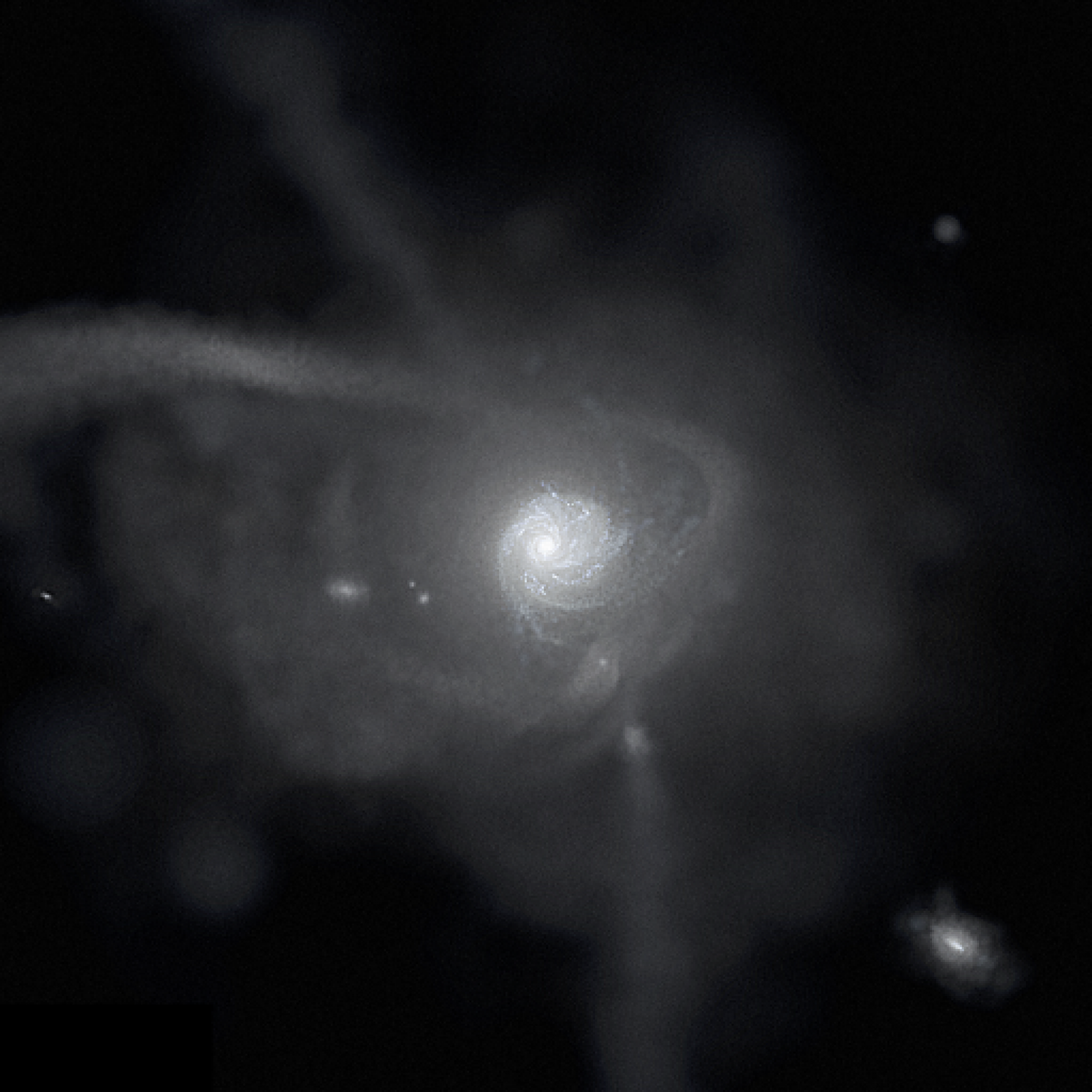
a Hubble Space Telescope (HST) Theory grant for Understanding the physics of gas stripping and star-formation quenching of the satellite dwarf galaxies in the Local Group. Our goal is to use our Latte suite of FIRE-2 simulations to understand how satellite galaxies evolve after they fall into a host halo like the Milky Way, with emphasis on how (internal) stellar feedback and (external) environmental processes like ram-pressure stripping remove their gas and quench their star formation, as observed in the Local Group.
The National Science Foundation (NSF) has awarded our FIRE collaboration an allocation of 160 million core-hours on NCSA’s Blue Waters supercomputer for Probing New Physics in Galaxy Formation at Ultra-High Resolution. With this allocation, we will push our FIRE-2 simulations, include the Latte suite of Milky Way-like galaxies, to unprecedented resolution: cosmological zoom-in simulations using over a billion particles per galaxy. We also will include new physical processes, including magneto-hydrodynamics, self-consistent cosmic ray transport/feedback, and full radiative transfer. Congratulations to the FIRE collaboration!
Space Telescope Science Institute has awarded our team
a Hubble Space Telescope (HST) Treasury Program of 164 orbits for Milky Way Cosmology: Laying the Foundation for Full 6-D Dynamical Mapping of the Nearby Universe. These Hubble Space Telescope (HST) observations will provide the initial baselines for long-term proper-motion measurements for all of the known satellite galaxies around the Milky Way. Our goal is to measure the orbital motions of these galaxies as they move across the sky over the next 3 – 10 years, to complete their full 6-dimensional orbital phase-space. Our key science goals are to